
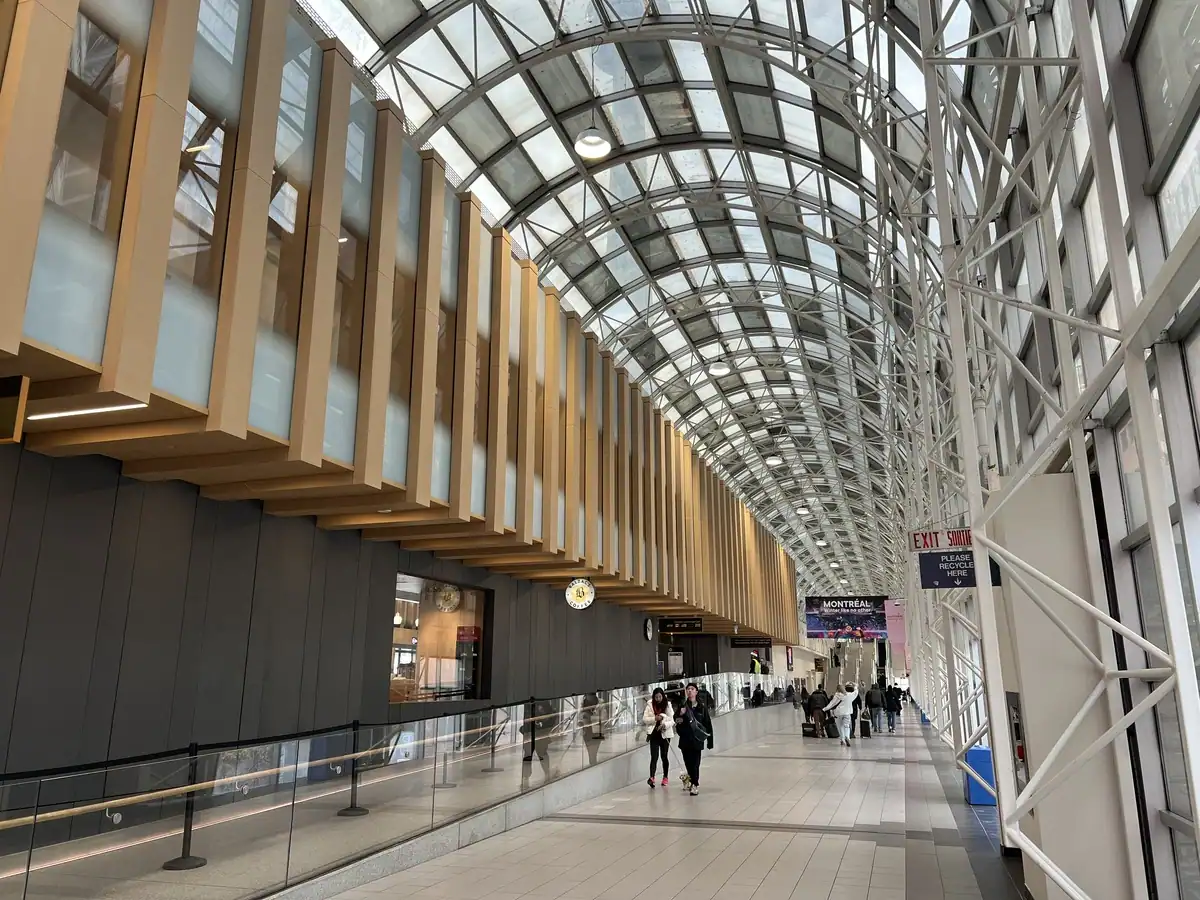
The PATH – Toronto’s Downtown Pedestrian Walkway
This site contains affiliate links. If you make a purchase using one of these links, we may receive compensation at no extra cost to you. See our Disclosure Policy for more information.
If you’ve ever walked through downtown Toronto and wondered how thousands of people seem to disappear beneath the streets, you’ve just uncovered one of the city’s most fascinating hidden spaces.
The PATH is one of the largest underground shopping walkways in the world with more than 30 kilometres of pedestrian pathways that transforms downtown Toronto into a second city below street level.
It connects Union Station, subway stops, major hotels, office towers, shopping centres, and cultural attractions into one sprawling indoor system most visitors don’t even realize exists.
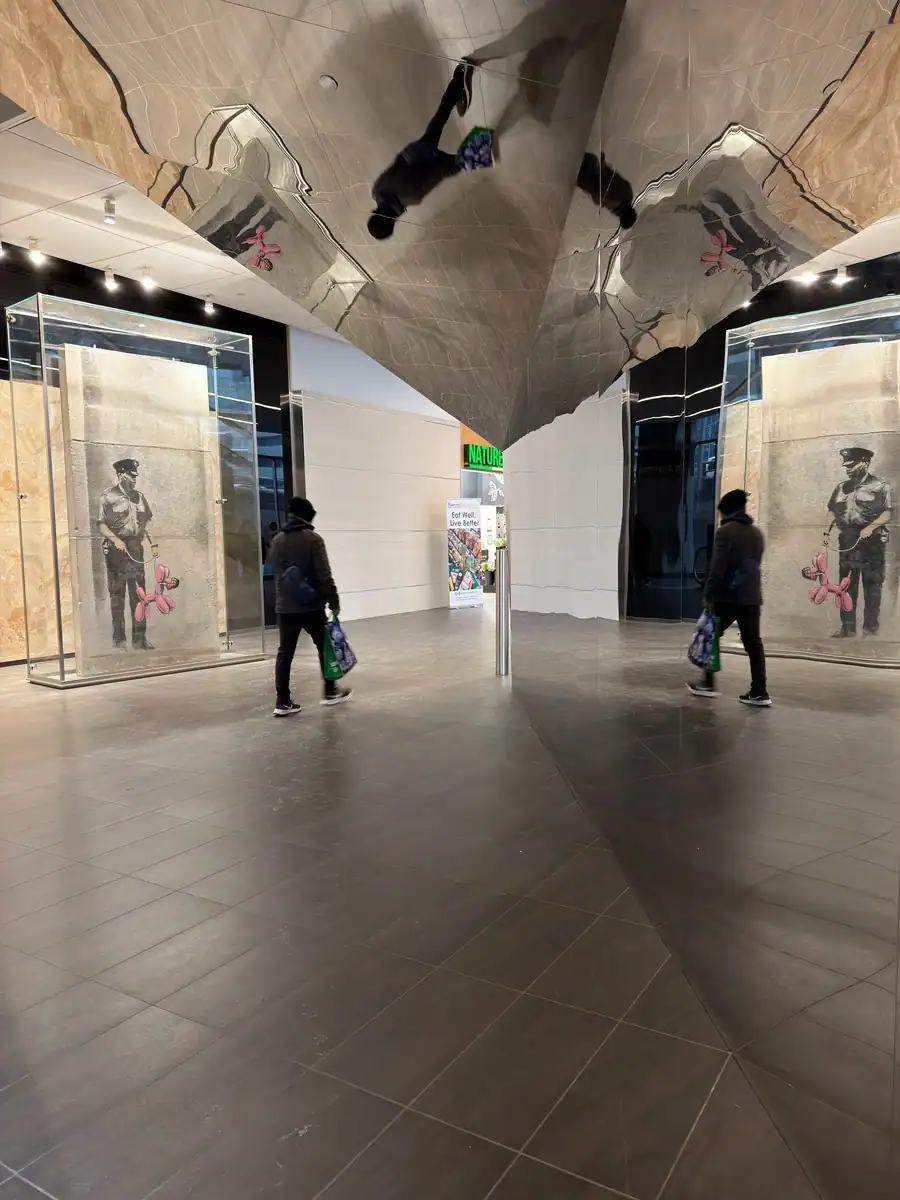
As someone who lives and works downtown, I’ve used Toronto’s PATH network in every season and for every reason. Just last week, I stumbled across an authentic Banksy tucked inside the network — something I’d walked by dozens of times before noticing.
For visitors, the PATH isn’t a traditional tourist attraction. It’s better than that. It’s an insider shortcut, a hidden urban layer, and one of those small discoveries that makes you feel like a local.
In this guide, you’ll learn:
- What to expect in the PATH
- How to navigate the PATH
- Where to eat, shop, and spot interesting hidden details underground
- How exploring the PATH enhances your trip to Toronto
Whether you’re visiting Toronto for the first time, staying downtown, or simply curious about what exists beneath the skyline, taking the PATH offers a completely different visitor experience.
Let’s go underground.
What is the Toronto PATH?
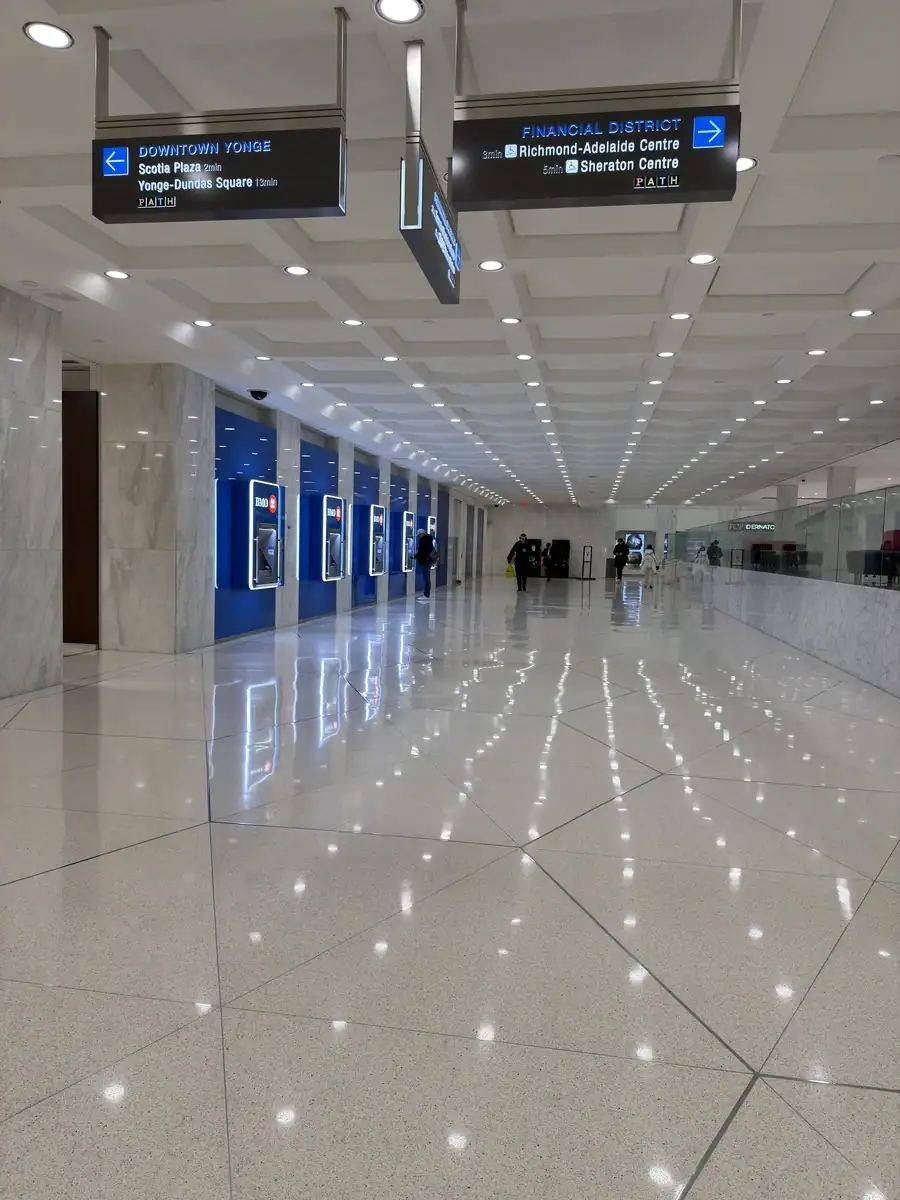
The Toronto PATH is a 30+ kilometre underground pedestrian network running beneath downtown Toronto. It connects more than 75 buildings, six subway stations (including Union Station), nine major hotels, and over 1,200 shops, restaurants, and services below ground.
In short: it’s a second version of downtown Toronto — built mostly below street level.
Through the PATH, you can walk from the Waterfront through the Financial District, across the Entertainment District, and up toward City Hall and Sankofa Square while spending very little time outdoors. It links office towers, transit hubs, shopping centres, event venues, and major attractions in a connected network.
Interestingly, the first passageway opened in 1900, linking Timothy Eaton’s main store to its bargain annex and encouraging customers to remain within the retail environment. In 1927, a tunnel was built to connect Union Station to the Royal York Hotel, offering arriving guests a discreet and seamless transition from train to luxury accommodation.
Expansion accelerated in the 1970s as office towers began linking their basements together, gradually forming the network that exists today. Today, on a typical weekday, more than 200,000 commuters, residents, and visitors use it to navigate the downtown core.
Toronto’s PATH is a part of how downtown functions, allowing people to move efficiently through one of Canada’s busiest business districts.
📌 If you’re wondering where to stay in Toronto – you’ll want to choose a hotel near Union Station. It’s the ideal location for transportation and it’s close to the city’s major attractions.
Is the Toronto PATH Worth Visiting for First-Time Visitors?
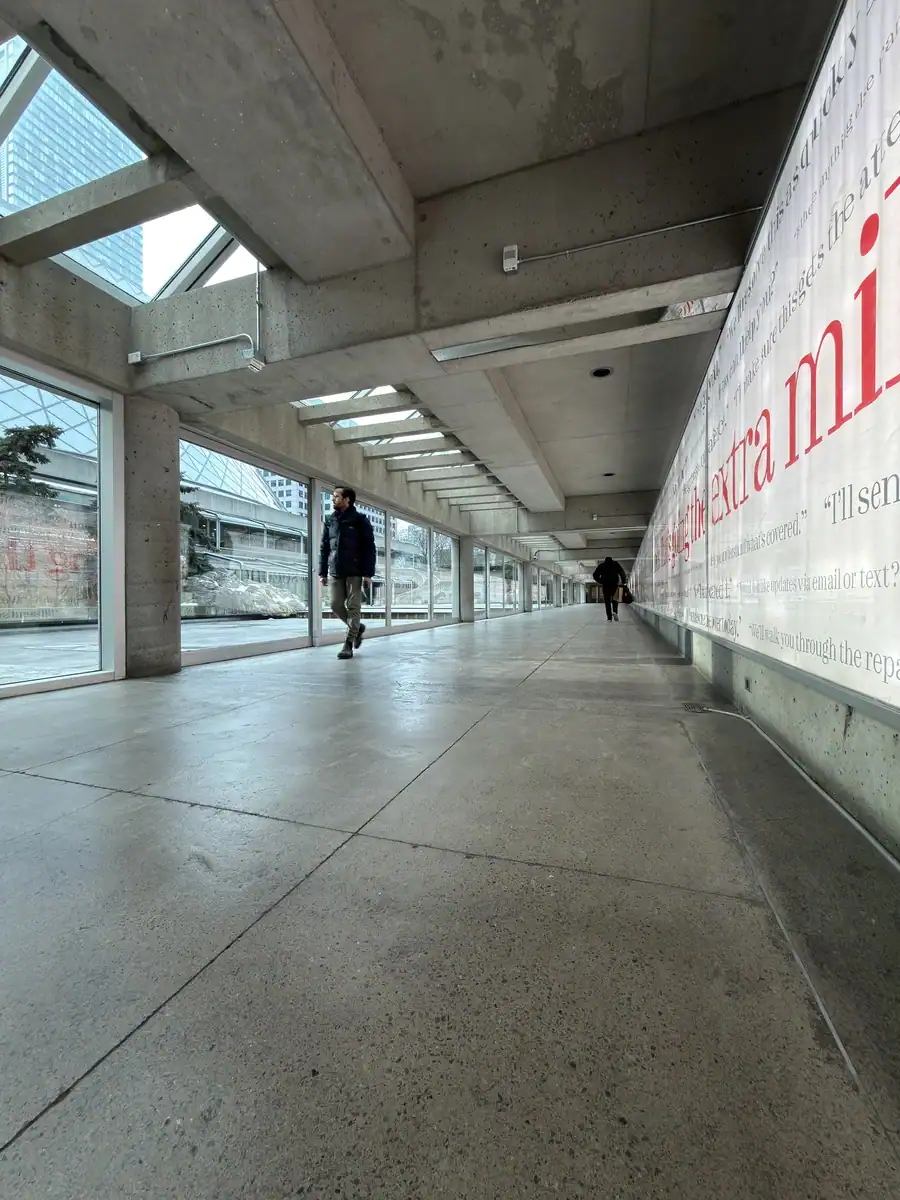
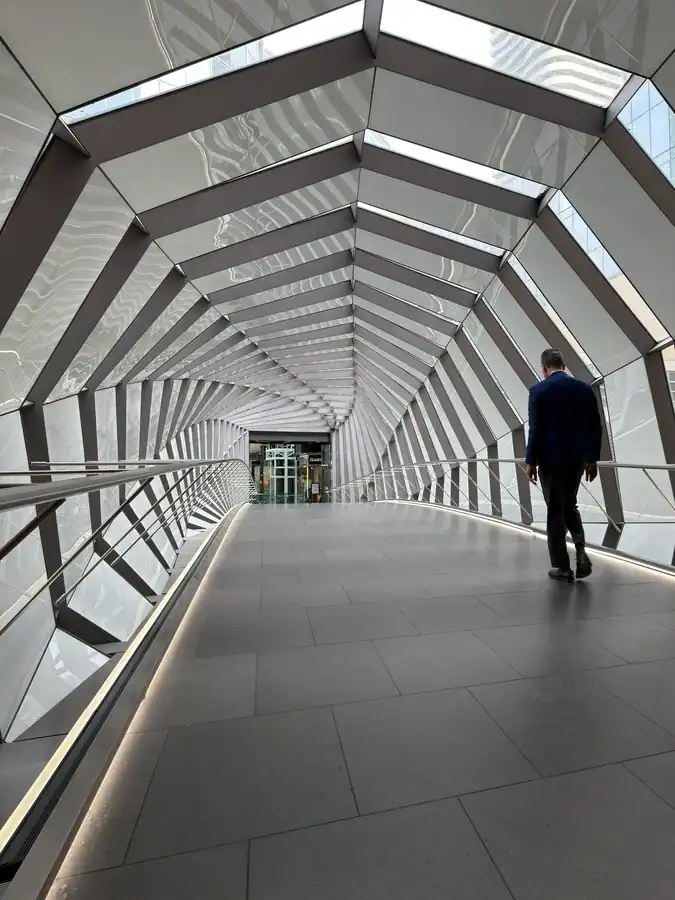
Yes — especially if you’re visiting downtown Toronto for the first time.
What makes the PATH fascinating isn’t just its scale — it’s that most visitors walk right over it without ever realizing an entire parallel version of the city exists beneath their feet.
The PATH isn’t a traditional sightseeing attraction. You won’t come here for postcard views or historic streetscapes. Instead, it offers something completely different: a glimpse into a hidden layer of pathways, shops, restaurants and cafes.
I also often use it when I want to avoid bad weather. If it’s pouring with rain or bitterly cold, I always head into the PATH to get between downtown destinations.
That said, the PATH can be confusing to navigate (even for us locals) – but that’s just part of the whole experience!
Key Areas of the PATH (By Landmark)
One of the most interesting things about the PATH is how seamlessly it connects to some of downtown Toronto’s biggest landmarks.
In fact, you could stay at a hotel like the Fairmont Royal York or the LeGermain Hotel and reach major attractions, the subway, shopping, and event venues without ever going outside.
Having explored every part of the PATH myself, here are some of the most interesting parts for visitors.
📍 Union Station Area
Union Station is the heart of the PATH.

If you’re arriving by GO Train, VIA Rail, UP Express, or TTC subway, this is where your underground journey usually begins.
From here, you can head south toward the waterfront, west toward the SkyWalk, or north into the Financial District before continuing on to the Eaton Centre shopping mall.
We always use the PATH to travel from Union Station to the CN Tower, Aquarium and Rogers Centre. It can get really busy when there’s a Blue Jay’s Baseball Game on, so we take the PATH to avoid some of the crowds.
Nearby Attractions:
- Fairmont Royal York
- Hockey Hall of Fame (accessible underground)
- Scotiabank Arena
- St. Lawrence Market (about one block outdoors)
If you ever find yourself lost in the PATH, Union is your best orientation point.
🚇 Wondering how to get around using public transportation? Read my guide to getting around Toronto without a car – ideal for tourists and first-time visitors.
📍 Convention Centre, CN Tower & Rogers Centre
Heading west from Union Station, the indoor SkyWalk connects you toward the Metro Toronto Convention Centre.
This route is especially helpful during large conventions — like the annual Auto Show or Comic Con — when thousands of visitors move between Union Station and the convention halls.
While you will need to briefly go outdoors to access the CN Tower, Ripley’s Aquarium of Canada, and Rogers Centre, much of the journey from Union can be done indoors.
From here, you can also access:
- Delta Hotels by Marriott Toronto
- InterContinental Hotel
- Metro Toronto Conventional Centre
- UP Express Train to Pearson Airport
How to Walk Indoors from Union Station to the CN Tower & Rogers Centre
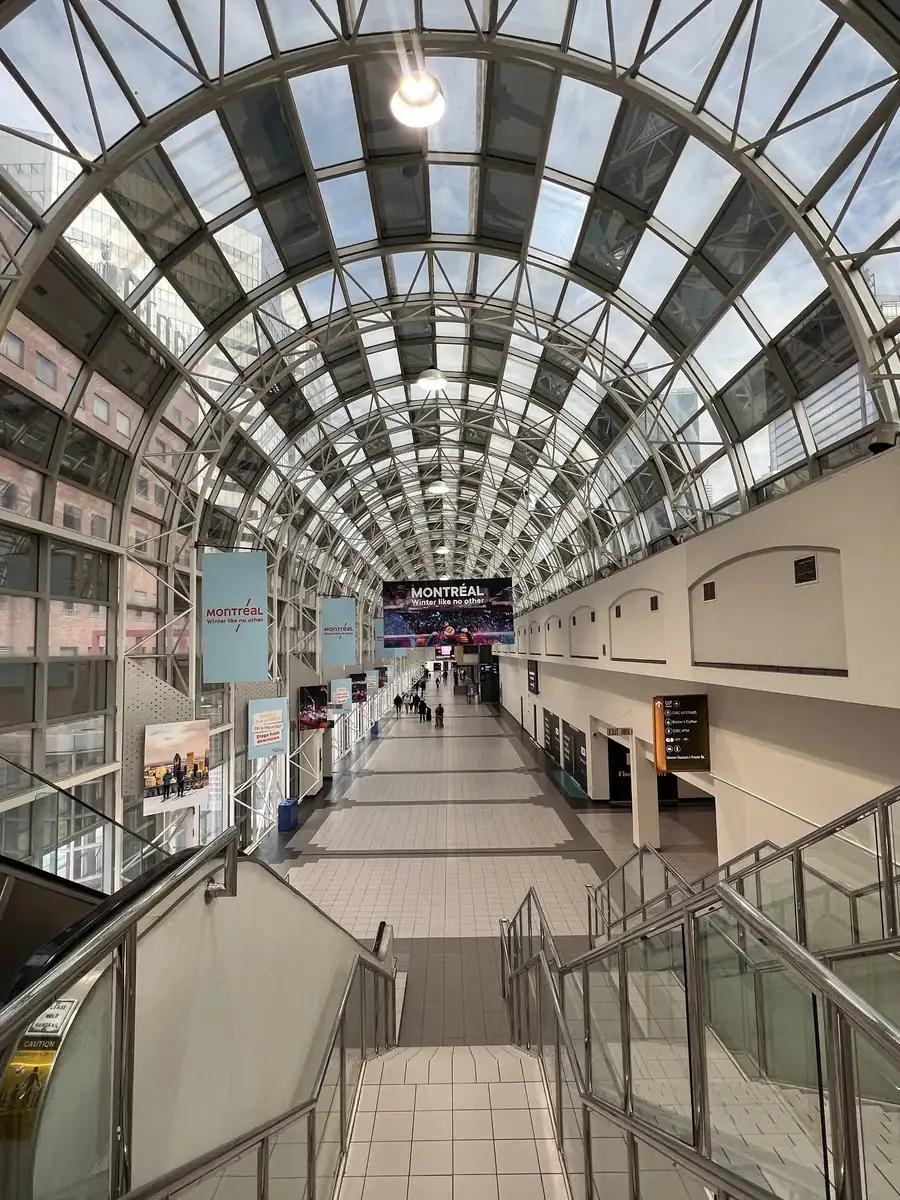
From Union Station, follow signage toward the SkyWalk and Metro Toronto Convention Centre. Continue west through the SkyWalk corridor. Once you exit near the convention centre, it’s a short outdoor walk to the CN Tower, Aquarium, and Rogers Centre.
If you are headed to or from a game or big concert, you can truly feel the energy of the crowd. I have been in these crowds after Taylor Swift’s Era’s Tour and when the Blue Jays were in the World Series – it’s an incredible experience to be part of the excitement of these events!
Nearby Attractions:
- Union Station & UP Express
- CN Tower
- Ripley’s Aquarium of Canada
- Rogers Centre
📍 The Financial District
This is the true core of downtown Toronto and where the PATH is busiest during the week.
Here, you’ll walk through towers like Royal Bank Plaza, TD Centre, First Canadian Place, Scotia Plaza, Commerce Court, and the Exchange Tower.
Brookfield Place and the Hockey Hall of Fame
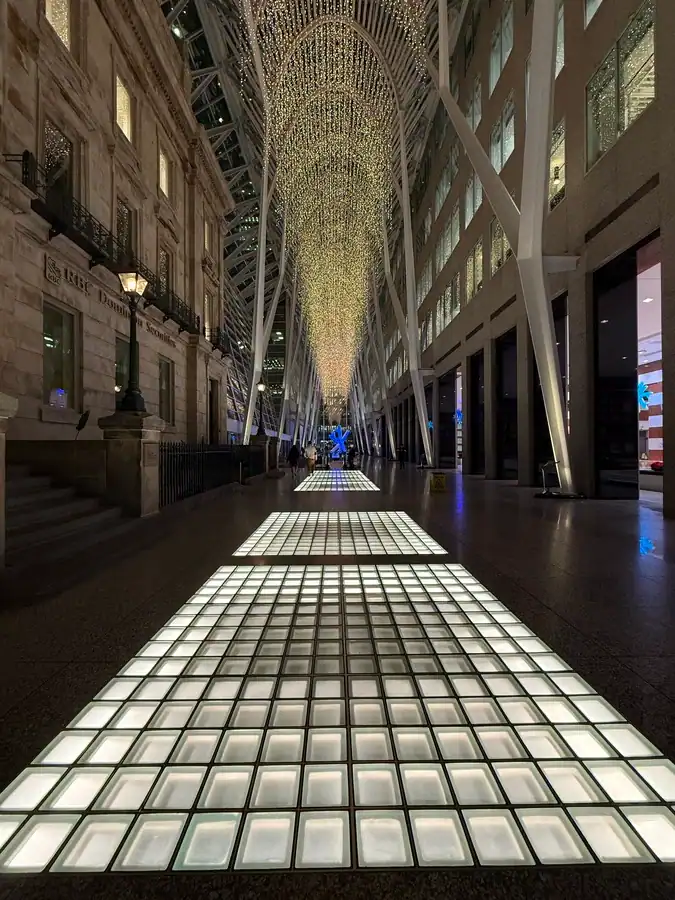
One of the prettiest indoor spaces in the PATH is Brookfield Place.
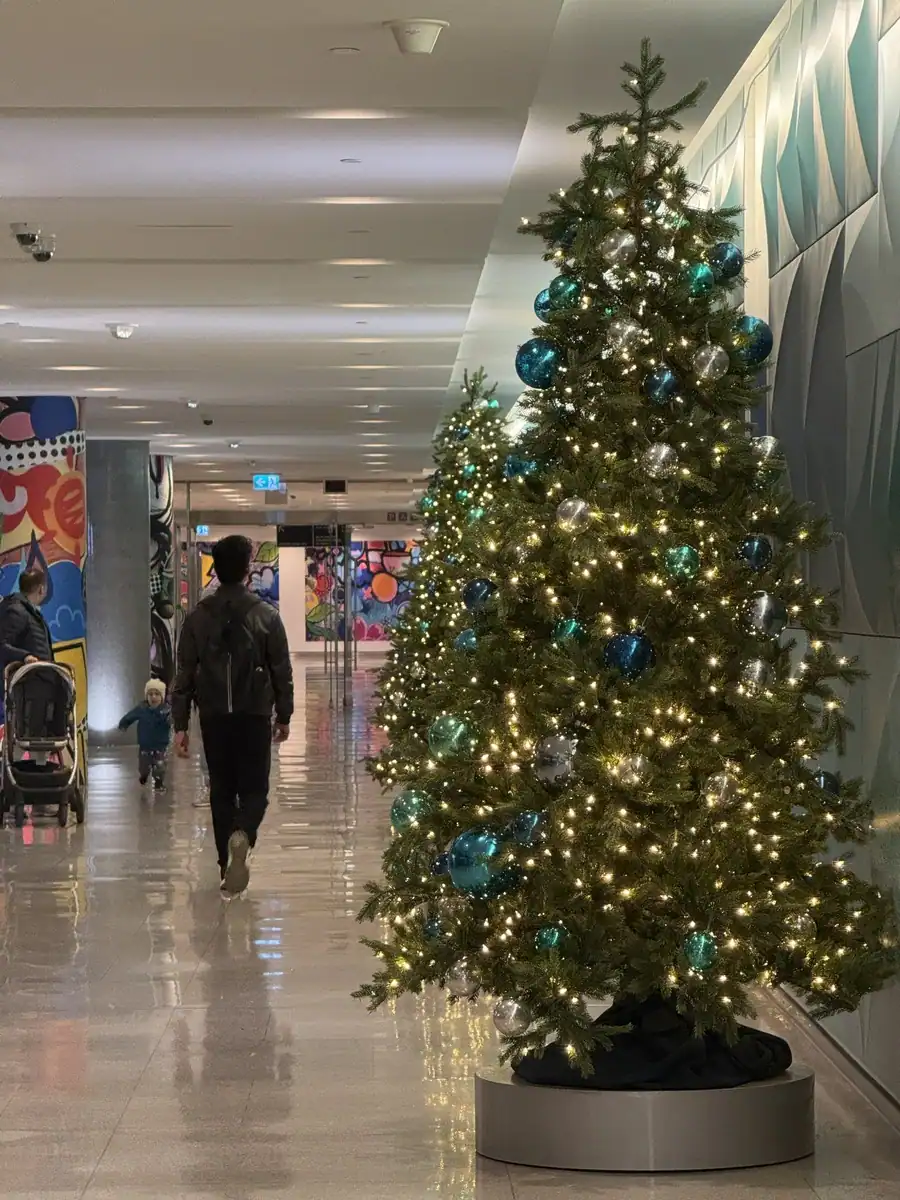
This is where I come every holiday season to take photos of the stunning Christmas lights. The soaring architecture alone makes it worth a stop and it’s one of Toronto’s most photographed indoor spaces.
On the lower level, you’ll find the one of Toronto’s best attractions – the Hockey Hall of Fame, and a Longo’s grocery store — perfect if you’d rather grab real food than another fast-food option.
Step just outside and you’re only about a block from Toronto’s historic St. Lawrence Market.
Commerce Court (A Hidden Gem)


Commerce Court is one of my favourite hidden spots in the Financial District.
Completed in 1931, this Art Deco landmark was once the tallest building in the British Commonwealth. Today, it’s still a functioning bank — but you can walk inside to admire the limestone detailing and intricate carvings. Look up. It’s one of the most beautiful interiors in downtown Toronto.
Outside, Commerce Court Square is home to “Tembo – Mother of Elephants,” a striking sculpture of a female elephant and her calves walking toward the courtyard fountain. It’s a surprisingly peaceful pocket in the middle of the financial core, with outdoor seating and space to pause.
Nearby Attractions:
- Hockey Hall of Fame
- Roy Thompson Hall
- Yonge Street
📍 Eaton Centre, Sankofa Square, and Yonge Street

This is the section of the PATH I use most often — usually when I’m heading north from Union to do some shopping.
You can walk almost entirely indoors from Union Station all the way to the CF Toronto Eaton Centre and Sankofa Square (formerly Yonge-Dundas Square). This is also the first stop on Toronto’s Hop on Hop off Sightseeing Bus – a tour I highly recommend for first-time visitors.
It also connects directly to the Sheraton Centre Toronto Hotel which means you can step out of your hotel and head straight into shopping without worrying about coats or umbrellas.
This stretch is especially useful in winter.
Nearby Attractions:
- Nathan Phillips Square and the Toronto Sign
- Sankofa Square (formerly Yonge-Dundas Square)
- Little Canada
- CAA Theatre
- Four Seasons Centre for the Performing Arts (home of the Nutcracker)
📌 Wondering if the Hop-on Hop-off Bus is worth taking? Read my review (from the perspective of a local) to Toronto’s sightseeing bus to see if it’s worth taking.
📍 Waterfront and the Ferry Terminal
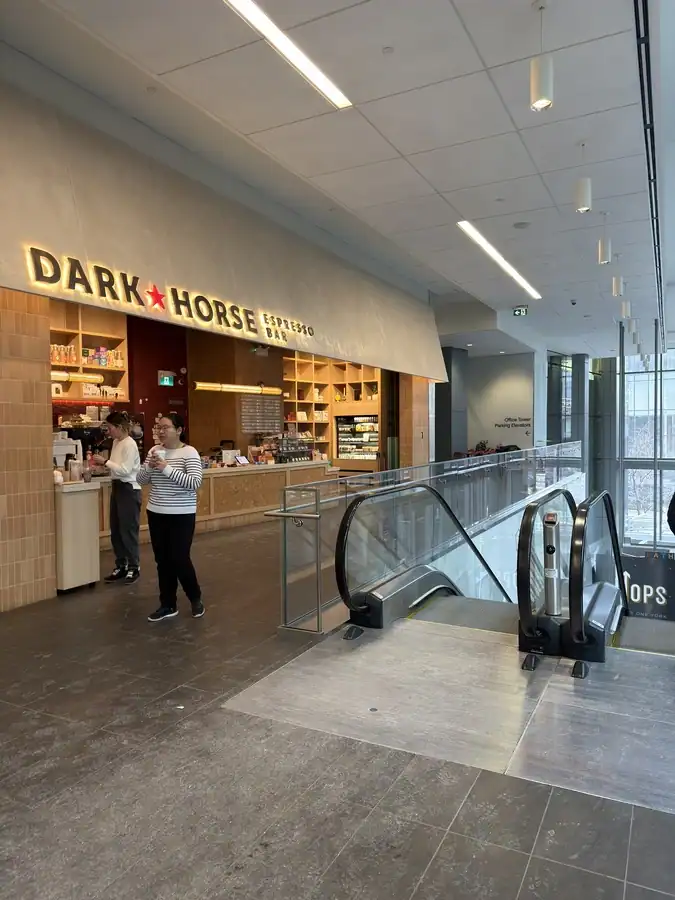
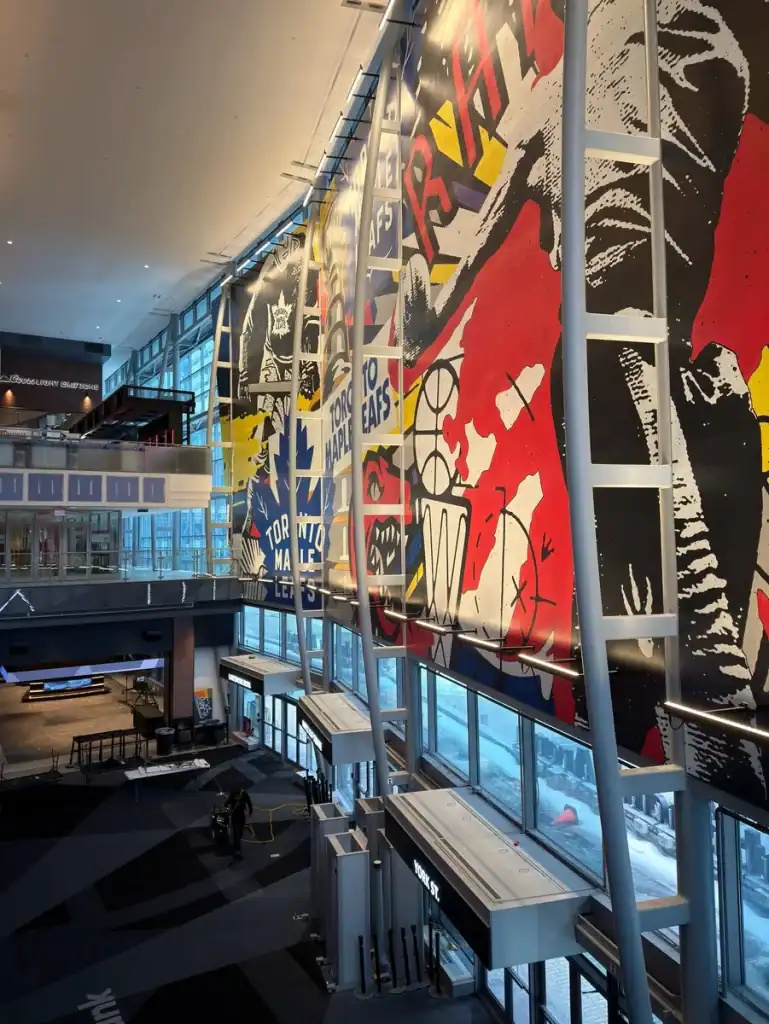
South of Union Station, the PATH connects toward Scotiabank Arena and Maple Leaf Square.
If you’re staying at Hotel Le Germain Maple Leaf Square, you can attend a Leafs or Raptors game without ever having to step outside. The area also includes restaurants, bars, retail stores, and another Longo’s grocery store.
If you’re visiting Toronto for sports, then you’ll want to make a reservation at The Real Sports Bar – it’s one of the best in the city.
One hidden gem nearby is an original Banksy artwork located at 1 York Street — something many people walk past without realizing.
Another underrated stop is the free rooftop garden at CIBC Square. It offers unique views of the CN Tower and Royal York Hotel — a peaceful oasis in the middle of downtown.
Continue south and you’ll reach the Jack Layton Ferry Terminal, where you can catch the ferry to the Toronto Islands.
Nearby Attractions:
- Scotiabank Arena
- Maple Leaf Square
- Jack Layton Ferry Terminal to the Toronto Islands
- Second City Comedy Show Toronto
- Real Sports Bar
📍 Yonge–Bloor Underground Walkway (Not Officially PATH)
While not officially part of the PATH system, many people don’t realize you can also walk underground between Yonge & Bloor and Bay & Bloor if you are staying in the Yorkville neighbourhood.
I work in this area, and it has saved me from freezing rain and winter wind more times than I can count.
You can access luxury retail at Holt Renfrew and connect through indoor corridors that make this stretch surprisingly practical during bad weather.
Nearby Attractions:
- Royal Ontario Museum
- Bata Shoe Museum
- Yorkville shopping district
Understanding these sections makes the PATH far less intimidating. Once you start thinking in landmarks instead of tunnel turns, the system becomes much easier to navigate — and far more useful.
Navigating the PATH
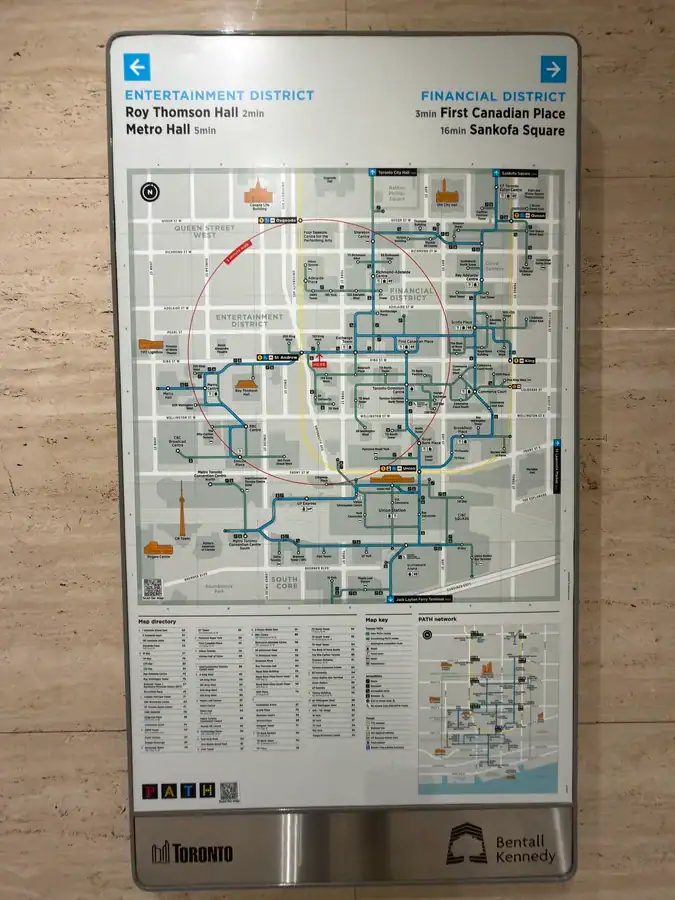
The PATH is confusing. Not just the first time and yes, even for us locals.
It wasn’t designed as one cohesive system. Over decades, different office towers and commercial buildings connected their own underground corridors, eventually forming the large network that exists today. That layered development is part of what makes it impressive and part of what makes it disorienting.
Entrances are often tucked inside office lobbies, signage assumes you already understand downtown’s layout, and some corridors flow more intuitively than others. Even with a map of the Toronto PATH I often get lost.
No one navigates the PATH perfectly. You just learn how to use it. You can find a complete map online – perfect to print and take with you.
Toronto PATH Hours (Important Before You Go)
The PATH is technically open 24 hours a day, 7 days a week — but that mostly applies to the corridors themselves. It is busiest Monday to Friday during business hours.
Shops, food courts, and services also generally follow business hours. Most close around 6 p.m. on weekdays, and many don’t open on weekends. If you’re planning to eat or shop underground, weekday daytime is your best bet.
I learned this the hard way one year after watching the Santa Claus Parade on a Sunday — I headed underground expecting warm food and coffee, only to find most restaurants closed.
Access can also become inconsistent later in the evening. Because the PATH connects private office towers and commercial buildings, some internal doors between sections may be locked at night. That can mean backtracking and surfacing at street level to continue your route.
Is the Toronto PATH Safe?
Yes — the PATH is generally considered safe.
It’s monitored by security because it connects to private office towers, hotels, and commercial buildings. Many entrances are located inside building lobbies with visible security staff, particularly during business hours.
During weekdays, it’s busy with commuters and office workers, especially at lunch. That steady foot traffic adds to the overall sense of safety. However, you will see unhoused people in the PATH. Just like locals use the PATH to escape the elements, so do our homeless population.
At night and on weekends, it becomes much quieter — particularly in the Financial District. The corridors remain open, but fewer shops are operating and some sections may feel empty. If you’re walking late at night, it’s wise to stay in well-lit, main corridors and avoid isolated sections.
Overall, it functions like any major downtown environment: stay aware of your surroundings, but there’s no widespread safety concern specific to the PATH itself.
For most visitors and locals, it’s simply another practical part of navigating downtown Toronto.
What Makes The PATH Unique?
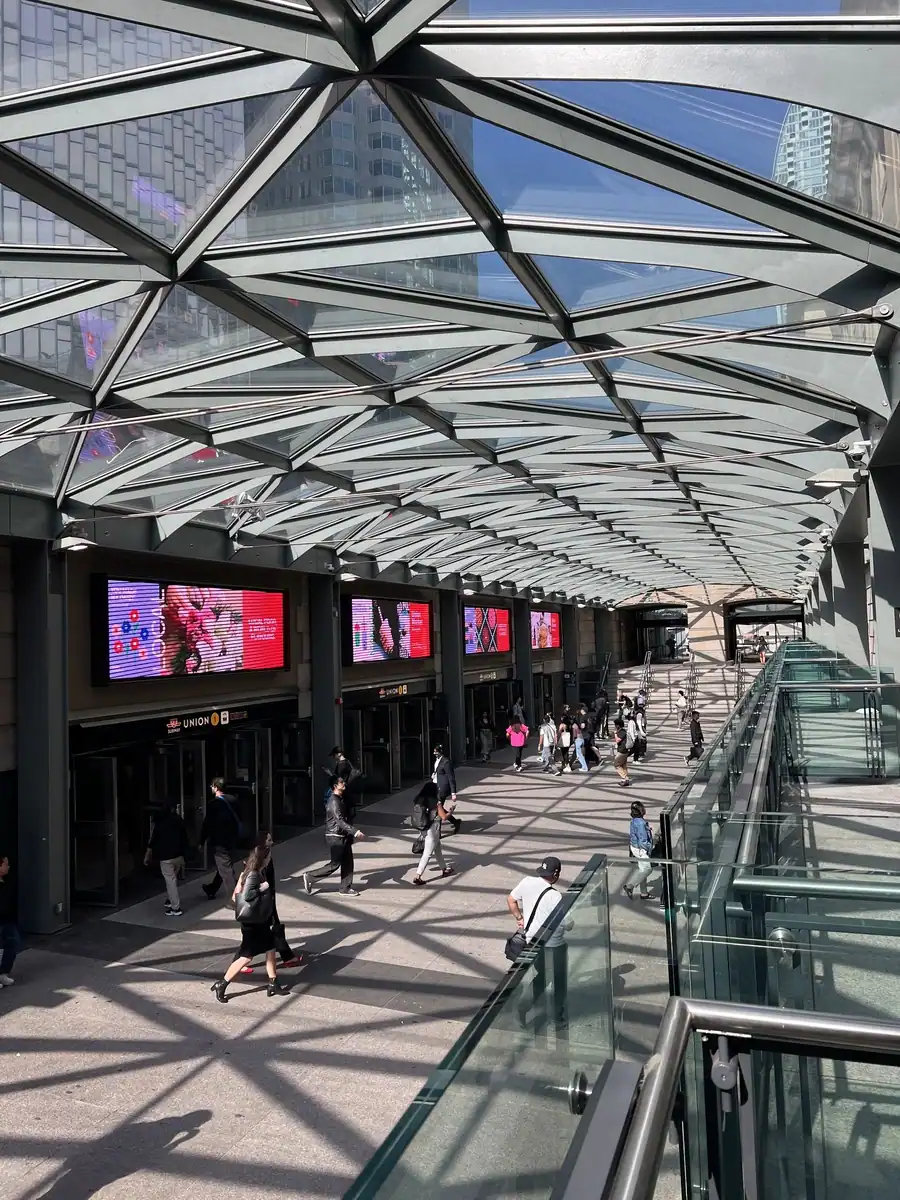
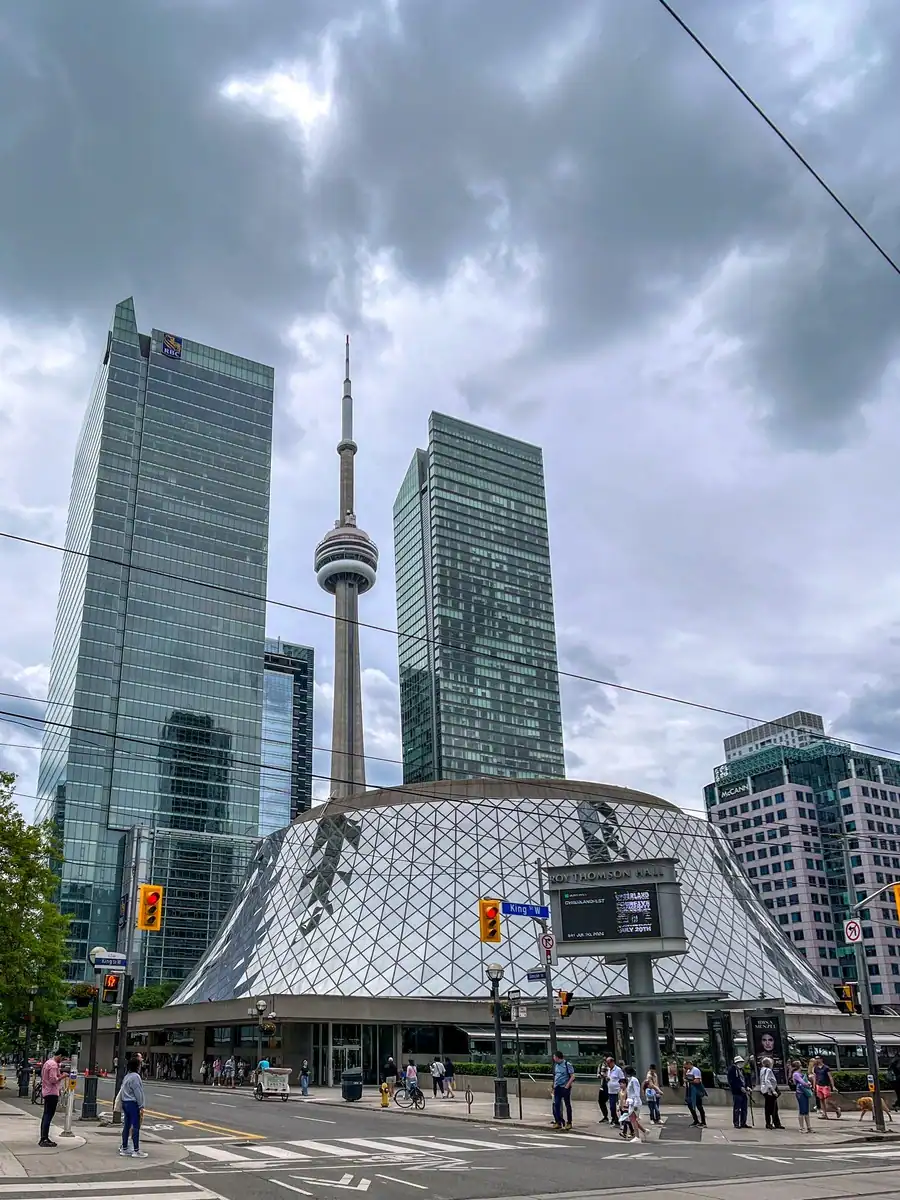
As you can see, you can access much of downtown Toronto from some part of the PATH. Here are a few ways the PATH is a helpful way to navigate the area.
✔ Connects to Public Transit
One of the PATH’s biggest advantages is how seamlessly it links to transportation.
It connects directly to Union Station — Toronto’s busiest transit hub — along with six TTC subway stations as well as major streetcar and bus routes.
If you’re arriving by GO Train, VIA Rail, the UP Express from the airport, or the subway, you can often step off your train and stay indoors all the way to your destination.
For example, you can walk all the way from Union to the Jack Layton Ferry Terminal that will take you to the Toronto Islands indoors through the PATH.
✔ When You Want to Avoid the Weather
Toronto weather can be intense — especially in winter, when wind tunnels between skyscrapers make short walks feel brutal.
The PATH allows you to move between key downtown areas without battling snow, heavy rain, or summer humidity. It’s one of the main reasons locals rely on it year-round.
✔ When You’re Staying Downtown
If you’re staying at a downtown hotel, the PATH can quietly make your trip easier.
Several major hotels connect directly or almost directly to the system:
- The Germaine Hotel Maple Leaf Square connects to Scotiabank Arena and links back to Union Station.
- The Delta Hotels by Marriott Toronto connects indoors toward Union Station.
- The Sheraton Centre Toronto Hotel offers direct access toward the CF Toronto Eaton Centre.
In colder months especially, that indoor access makes a noticeable difference in comfort. It’s also great if you come to the city to do some holiday shopping. You can go from your hotel to the mall without having to wear your winter coat and boots!
✔ Before Games, Concerts, or Events
With more than 1,200 shops, restaurants, and services inside the network, the PATH makes grabbing coffee or a quick meal before an event much easier than competing with crowded street-level restaurants.
If you’re heading to Scotiabank Arena, Roy Thomson Hall, or the Convention Centre, staying indoors simplifies the experience.
Your Guide to the Toronto PATH
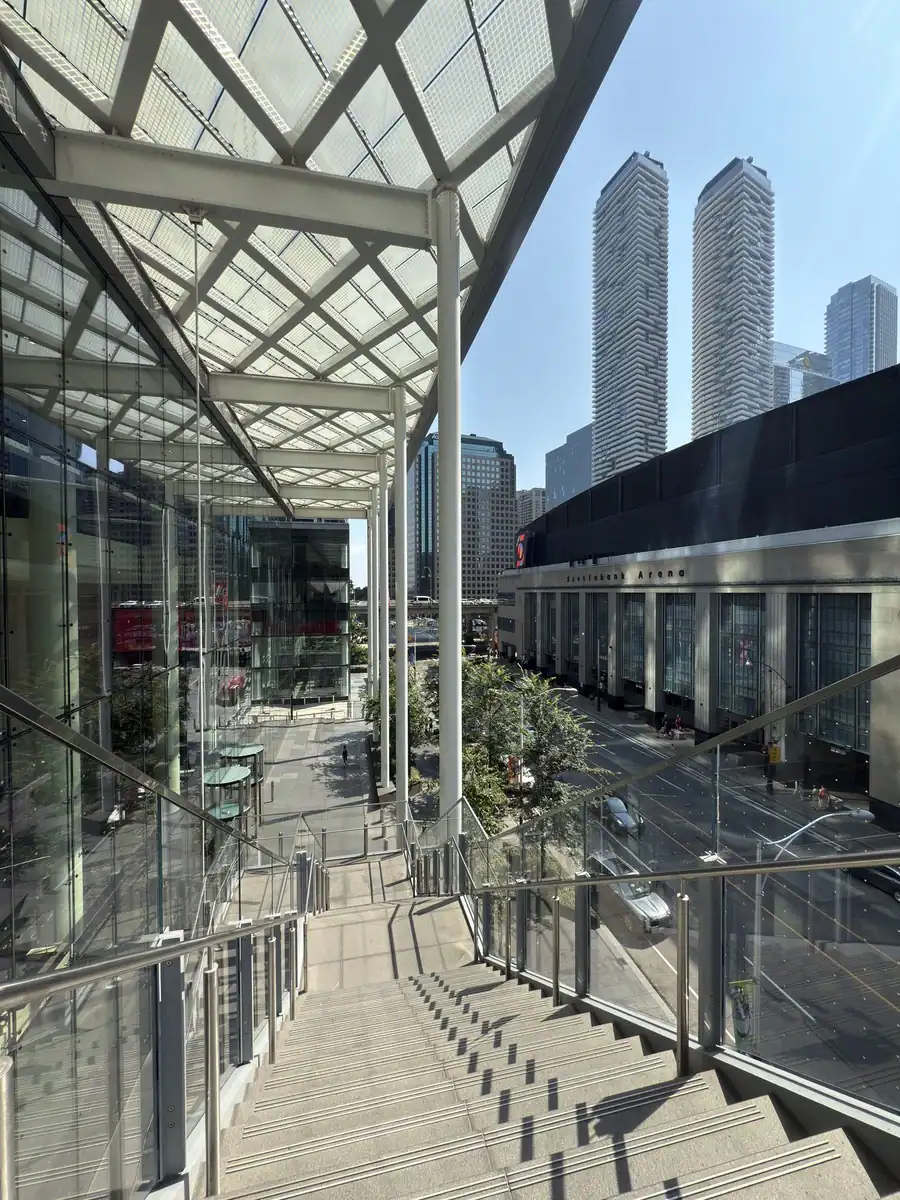
If you are visiting Toronto for the first-time, you might be wondering what the PATH is all about. Essentially, this massive web of connected walkways running beneath downtown Toronto links office towers, hotels, transit hubs, restaurants, shopping centres, and some of the city’s biggest attractions into one indoor network.
It’s practical — but it’s also surprisingly impressive once you understand the scale of what exists below street level.
For visitors to Toronto, the PATH is a great way to:
- Enjoy one of the world’s largest underground networks
- Move easily between Union Station, hotels, and various Toronto attractions
- Access subway stations without stepping outside
- Eat at some of the city’s great restaurants, cafes, and food courts
- Go shopping at some of Toronto’s most unique stores
- Avoid the weather – winter wind, summer heat, or pouring rain
For some visitors, the PATH is an unexpected highlight — an underground city packed with shops, restaurants, transit links, and architectural surprises.
So the next time you are visiting Toronto, keep your eyes open for the PATH signs posted throughout the many Toronto buildings and then head down the stairs to explore a hidden world beneath the downtown streets.
Still finalizing your plans to visit Toronto?
You might find these travel guides helpful:
- First-Time Visitors Guide to Toronto
- Best Time to Visit Toronto – A Seasonal Guide
- Things to do in Toronto for First Time Visitors
- Perfect 4 Day Toronto and Niagara Travel Itinerary
☞ Join my Facebook Group: Toronto, Ontario, and Niagara Falls Canada Travel Tips and Planning to ask your questions and get personalized travel help from a local.
